Georgetown Program Connects Community Innovators With Mental Health Research and Resources
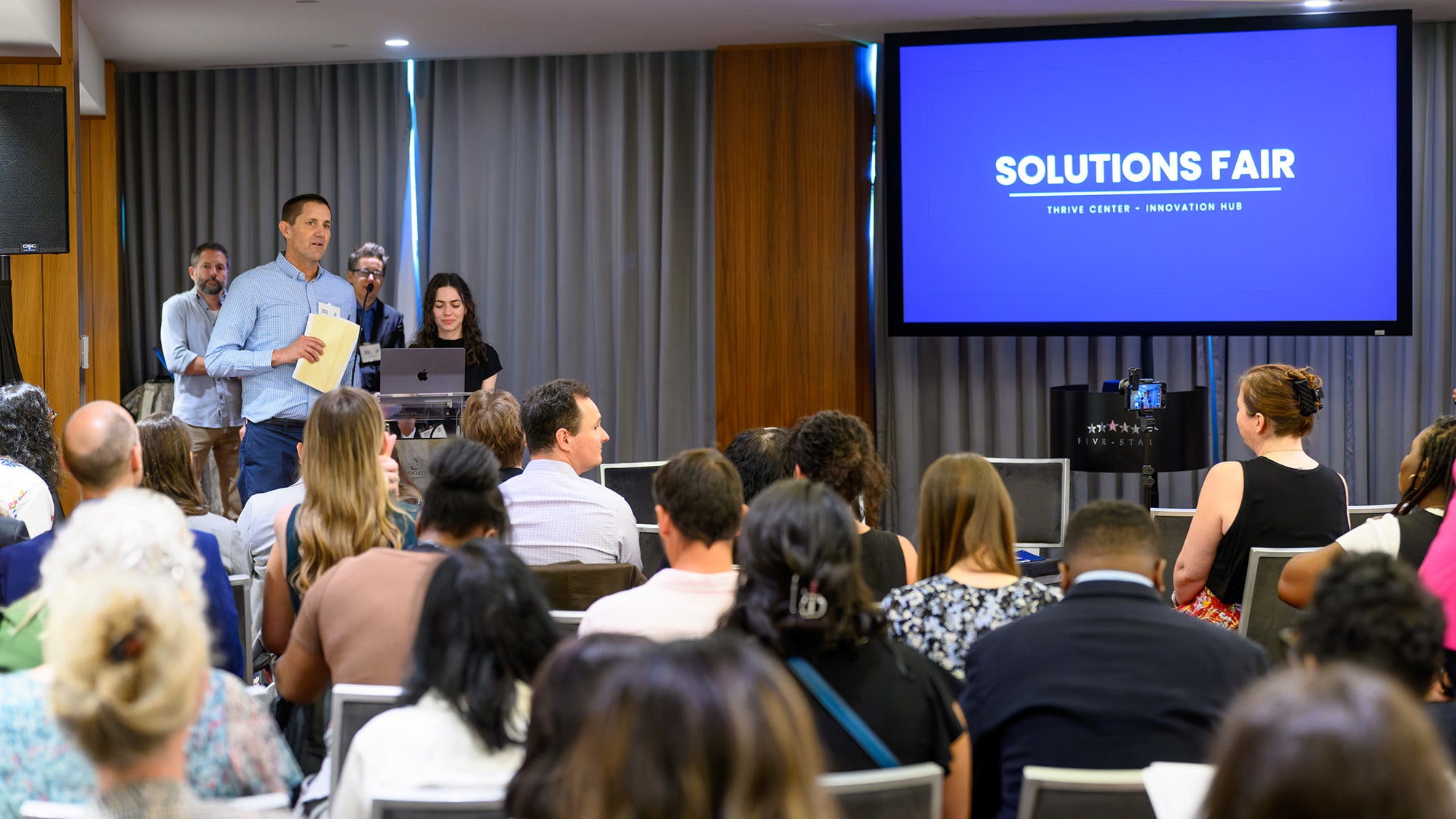
(May 29, 2026) — From virtual treatment programs for justice-involved teens to AI-powered tools helping overwhelmed new parents, community-driven mental health organizations gathered for a solutions fair hosted by the Innovation Hub at the Thrive Center for Children, Families, and Communities. The May 20 event at the Watergate Hotel showcased solutions by the Innovation Hub’s fellows designed to support children and families through early childhood development, including expanding access to mental healthcare and disability services.

Matthew Biel, MD, MSc
The event highlighted the pairing of grassroots innovation and lived experience with academic research and institutional support through lightning talks from fellows and advisors, and an interactive exhibition where organizations demonstrated hands-on activities and shared research findings with attendees. The event was sponsored by the A. James and Alice B. Clark Foundation and the Luminary Impact Fund.
“It’s really wonderful the ideas that come out of academia, but a lot of more wonderful ideas come out of communities around the country and around the world,” said the Thrive Center’s director, Matthew Biel, MD, MSc, professor of psychiatry at the School of Medicine and chief of child and adolescent psychiatry at MedStar Georgetown University Hospital. “This is a chance for us to learn from really innovative thinkers and also to apply our expertise to problem-solvers who are really in the trenches.”
Bridging Community Experience and Academic Expertise
The three-month fellowship for innovators, who presented their work at the event, launched in February 2025 and now includes representatives from 19 organizations collectively serving more than 2 million children and families across more than 20 states and several countries.

Jason Lehmbeck
Jason Lehmbeck, managing director of the Innovation Hub, said the fellowship is intentionally designed to elevate organizations already embedded within communities. The nonprofit and business leader fellows are paired with researchers and clinical experts to help organizations strengthen data collection, validate outcomes and prepare to scale their programs into schools, healthcare systems and community settings.
“How do you bring leaders who are in community, who are working in partnership with community, kids and families, to bring new solutions to life informed by relationships or knowledge of experience?” Lehmbeck said. “What we love to bring to life at these events is to lift up their stories of hope and the solutions they’ve developed to support kids and families.”
Virtual Care for Justice-Involved Teens
The solutions fair featured interactive exhibits from fellows working across foster care systems, schools, juvenile justice programs and maternal mental health services. At the center of the event was the idea that some of the most effective mental health solutions are emerging directly from communities navigating gaps in care.
“We are really dedicated to supporting innovation in the fields of early childhood and mental health and disability care,” said Biel. “Many of the entrepreneurs we work with are people who have lived experience, either in their own lives or raising their children, navigating services and identifying gaps in systems. They’re the perfect people to be building the systems that we need.”
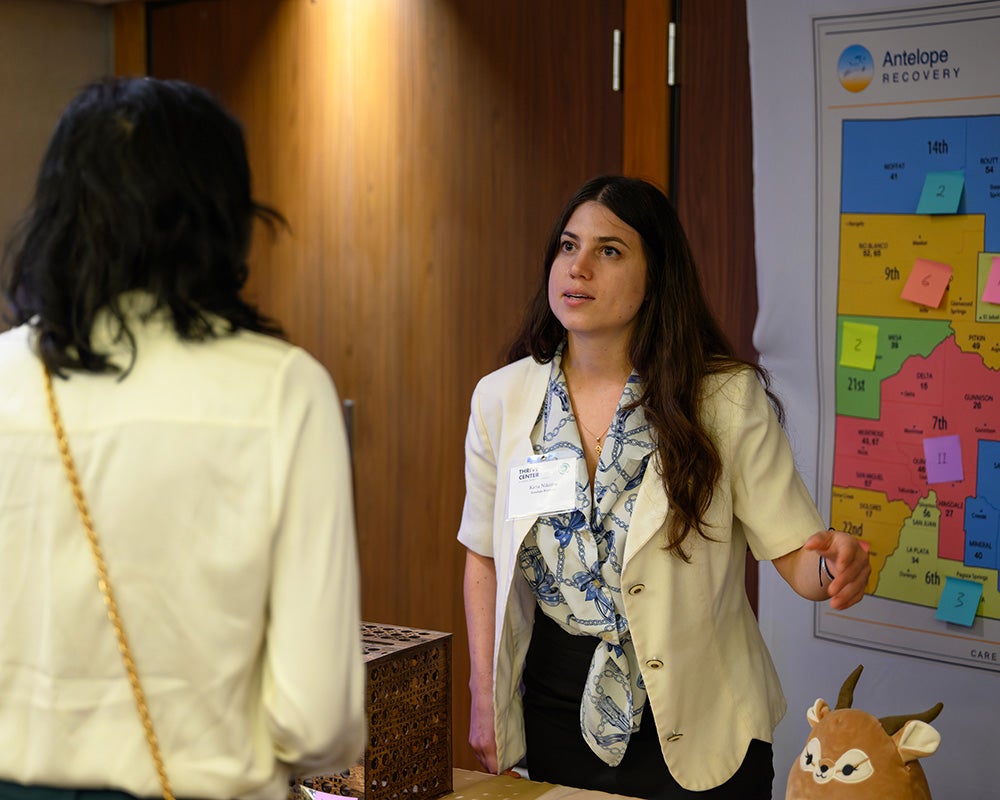
Katia Nikitina discussed Antelope Recovery with an attendee.
Among the organizations presenting was Antelope Recovery, a Colorado-based provider of virtual mental health and substance-use treatment for adolescents involved in the justice system. Katia Nikitina, the organization’s co-founder and chief operating officer, said the fellowship helped Antelope Recovery formally measure outcomes for teens receiving trauma-informed virtual care through partnerships with officers, probation teams and judges that make up the rural safety net for the families they serve.
“Getting an entire team of researchers to partner with has just been amazing,” Nikitina said. “We founded Antelope in 2022, and we have been wanting to measure our outcomes for quite a while, and actually getting to do that with Georgetown’s support has been amazing.”
“We got to talk to kids, teenagers who were in our program and their parents,” Nikitina added. “It was really inspiring seeing that most of our kids were not getting arrested after care with us and were meeting milestones like graduating from high school and finding employment.”
AI Tools Address Rising Parental Stress
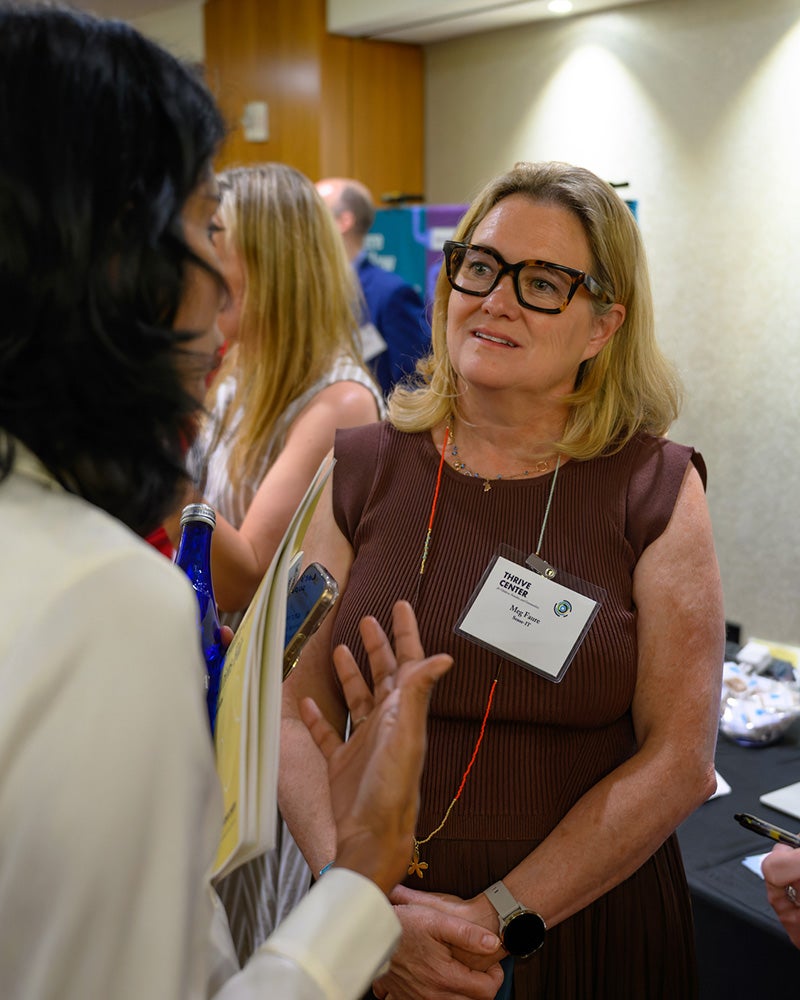
Meg Faure spoke with an attendee about her organization’s ParentSense app.
Another organization, Sense-IT Limited, showcased how technology may help address rising parental stress and isolation during early childhood. Meg Faure, founder and chief executive officer, said her company’s ParentSense app combines AI-driven support with clinical guidance for parents from pregnancy through the first five years of childhood.
Faure said the fellowship brought scientific rigor to a startup environment often driven by intuition and urgency. “Startups like us are a little bit fly-by-the-seat-of-our-pants and down-and-dirty to make it happen,” she said. “Having an academic partner who actually can work with you and say, ‘Well, let’s look at the evidence. Let’s put a little more rigor behind this,’ has been amazing.”
Research conducted through the fellowship found that stress levels remained high among parents, even among those who felt confident caring for their children. “One finding that surfaced very highly was that parents were stressed,” Faure said. “Even when parents feel like they’re coping, or feel like they’re OK at meeting their baby’s needs, their stress is still very high.”
The organization also found that highly stressed parents were more likely to turn to AI tools for support. “It’s a very interesting finding, because we’re just at the start of AI becoming a companion for parents,” Faure said. To better understand how AI will impact early parenting, Faure and her team are partnering with MedStar Health to make the ParentSense app available to new parents to see if signs of perinatal depression could be detected from engagement with the app.
Expanding Access Through Collaboration

The solutions fair reflected a broader push to rethink how mental healthcare is developed.
Organizers said the fellowship is designed to help emerging organizations scale faster by connecting them with researchers, funders and public systems that can broaden their reach.
For participants and organizers alike, the solutions fair reflected a broader push to rethink how mental healthcare is developed by centering community expertise alongside academic and clinical knowledge.
“I think we’re uniquely positioned to be a platform for these organizations,” Lehmbeck said. “This is at the heart of Georgetown’s mission around social justice and service, to lift up and serve kids and families, and meet them where they’re at.”
Heather Wilpone-Welborn
GUMC Communications