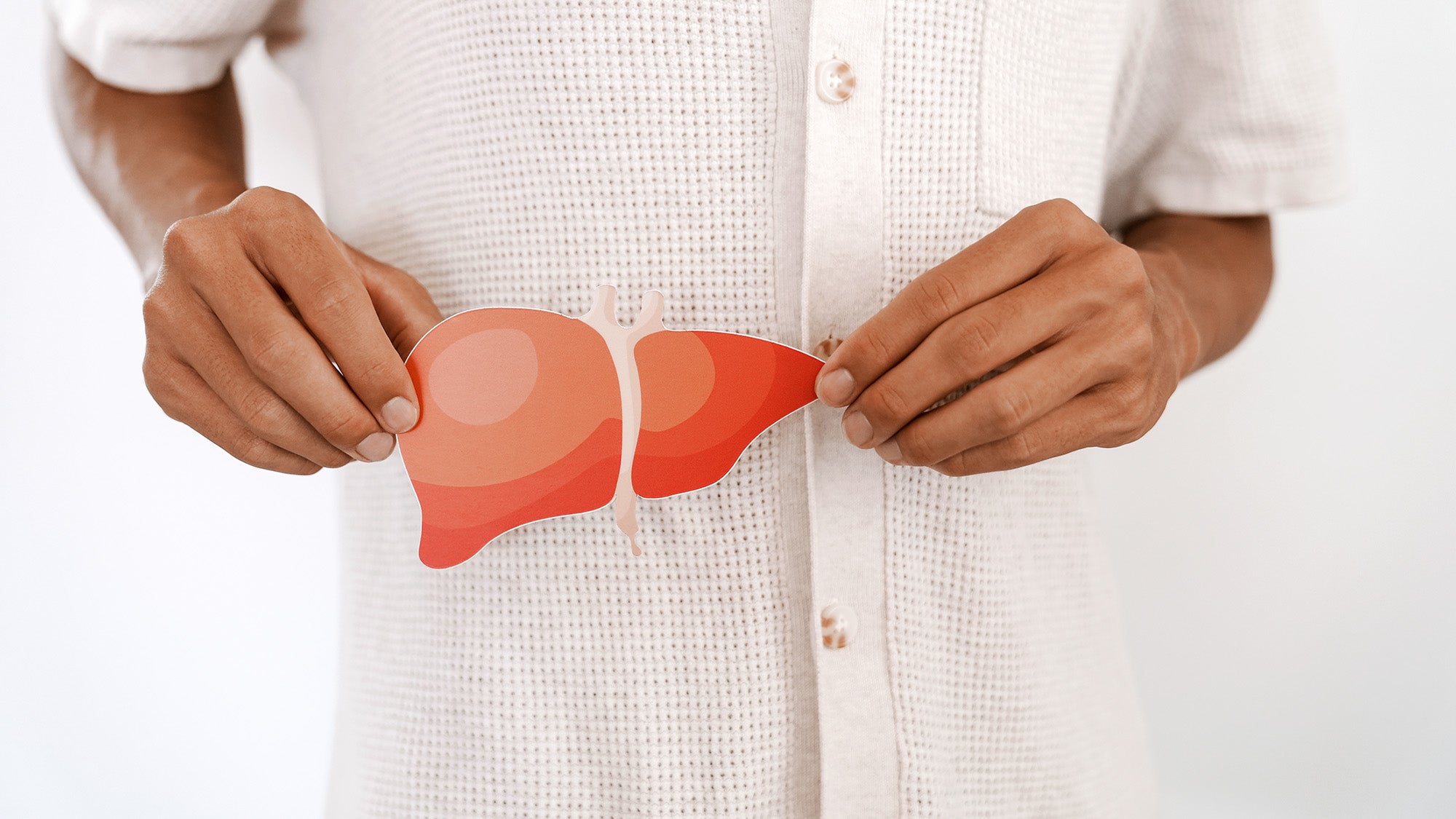
Renowned Liver Expert Joins Georgetown, with Eye to Raising Awareness of ‘Hidden’ Disease
(August 26, 2026) — Georgetown’s Zobair Younossi, MD, MPH, wishes more people would pay attention to the liver. In fact, he has built his career on studying and treating this often-overlooked organ, with far-reaching effects.
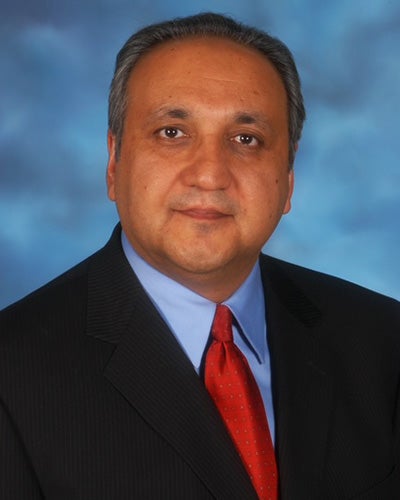
Zobair Younossi, MD, MPH
A world-renowned hepatologist, Younossi is one of the most highly cited scholars in both liver disease and metabolic dysfunction-associated steatotic liver disease, or MASLD, with an h-index of 161 and nearly 177,000 citations to his name.
He also chairs the Global NASH/MASH Council, a network of nearly 300 hepatologists across 63 countries that he established in 2014, along with the associated Global Liver Registry, which has enrolled more than 18,000 patients worldwide. (NASH is an older acronym used before MASH, or metabolic dysfunction-associated steatohepatitis, a more serious form of MASLD).
Younossi joined Georgetown earlier this year as professor of medicine at the School of Medicine, and as founding chair of the new Global Center for Liver Outcomes and Policy Research, known as G-CLORP.
For Younossi, the citations and the research are not the endgame. His goal is for the liver to become part of routine primary care, with MASLD screened for and discussed the way other chronic conditions already are.
To that end, Younossi said awareness is still the missing piece.
“We want it so that patients and primary care physicians are thinking about the liver the same way they think about their eyes, their heart, and their kidneys,” he said.
Hidden Disease
At the time Younossi began his career, hepatitis C was among the most common liver diseases. In the decades since, as effective antiviral treatments have made hepatitis C curable in 95% of patients, MASLD has become the field’s most pressing challenge.
Formerly known as nonalcoholic fatty liver disease, MASLD is the most common liver disease in the world, affecting roughly one in three adults in the United States.
MASLD occurs when excess fat builds up in the liver, most often in people with obesity, Type 2 diabetes, high blood pressure, or high cholesterol.
It exists on a spectrum, ranging from mild fatty buildup to a more serious, inflammatory form called MASH, or metabolic dysfunction-associated steatohepatitis. The latter can progress to cirrhosis or liver cancer if untreated.
Despite its prevalence, Younossi said a very low percentage — he estimates as low as 5 percent — of at-risk patients are currently being screened in primary care, despite national guidelines that call for it. It is often called a “hidden” or silent disease because of the lack of noticeable symptoms in early stages.
Beyond Lab Values
As the son of a biology teacher and an economist, and the first doctor in his family, “medicine wasn’t the most natural field for me to go into,” Younossi said. Even so, he was drawn into it early, sensing the difference he could make for patients.
He trained at the University of Rochester School of Medicine and Dentistry, then in internal medicine, gastroenterology and hepatology at Scripps Clinic and Research Foundation in La Jolla, California, before beginning his career as a hepatologist and researcher at the Cleveland Clinic.
He moved to Virginia in 2000 to build and lead the Center for Liver Diseases at Inova Fairfax Hospital, and over the next two decades took on a series of leadership roles at Inova, including chairing the Department of Medicine and serving as vice president for research of the Inova Health System.
Despite his steady advancement and increasing responsibility, patient care — and pursuing research that will improve more patients’ lives — has always been at the heart of Younossi’s work. Early on, he came to see research and education not as separate from patient care, but as a way of elevating it.
He continues to view his life’s work as an interconnected tripod of clinical care, research and education.
“When you do research and bring that new information to the patient’s side, or you have a fellow or resident in the room with you, you’re elevating patient care,” he said.
For Younossi, treating liver disease has never been just about the numbers.
“You can normalize blood tests and liver enzymes, but if the patient at the end of the day is not experiencing wellness, then you’ve done only half of your job,” he said.
This philosophy fits naturally within Georgetown’s Jesuit tradition of cura personalis, or care for the whole person. It has driven Younossi’s career-long push for patient-reported outcomes and quality-of-life research, looking past lab values to ask how patients are actually living with their illness.
Multi-Disciplinary Hub
In G-CLORP, Younossi envisions a center dedicated to patient-centered research, education and policy. Much as physicians screen diabetic patients for eye and kidney complications, he sees the center’s model eventually extending beyond MASLD to a broader, multisystemic approach to chronic liver disease.
What drew him to Georgetown in the first place, he said, was the strength of the medical school, the well-established liver program, the university’s policy connections, and a robust global health infrastructure.
“What we are hoping is that at some point, the center will be a hub for research that cuts across specialties and brings specialists together from across the globe,” he said.
Passion for Lifelong Learning
Younossi credits two mentors with shaping how he thinks about his work: Gordon Guyatt, MD, MSc, a pioneer of evidence-based medicine at McMaster University in Ontario, Canada, and the late Anthony Tavill, MD, a renowned Cleveland hepatologist who taught him that medicine is as much about humanity as it is about science.
“I’ve seen how mentorship doesn’t stop when you get a certain position or achieve a certain title. I still look for mentors to this day,” he said.
That mindset of lifelong learning is part of what has kept him energized for more than three decades.
“I always say that I haven’t had a job for the past 30 to 40 years, because when you’re passionate and excited about what you do, it’s no longer a job. There is nothing else I would do.”
Translating Research Into Practice
His passion carries forward to making more people aware of liver disease, both in terms of causes and treatments. Raising awareness, he said, means working with patients, primary care physicians, and policymakers to build the evidence base that can ultimately shift perceptions and practices among both patients and the medical community.
Younossi cited the Global NASH/MASH Council’s 2023 invitation to address the World Health Assembly on obesity-related liver disease as an example of how research can profoundly influence policy.
“It took a while, but the WHO has now accepted MASLD as an important noncommunicable disease,” he said. “Our job is to provide policymakers with the evidence they need to make the changes that matter most for population health.”