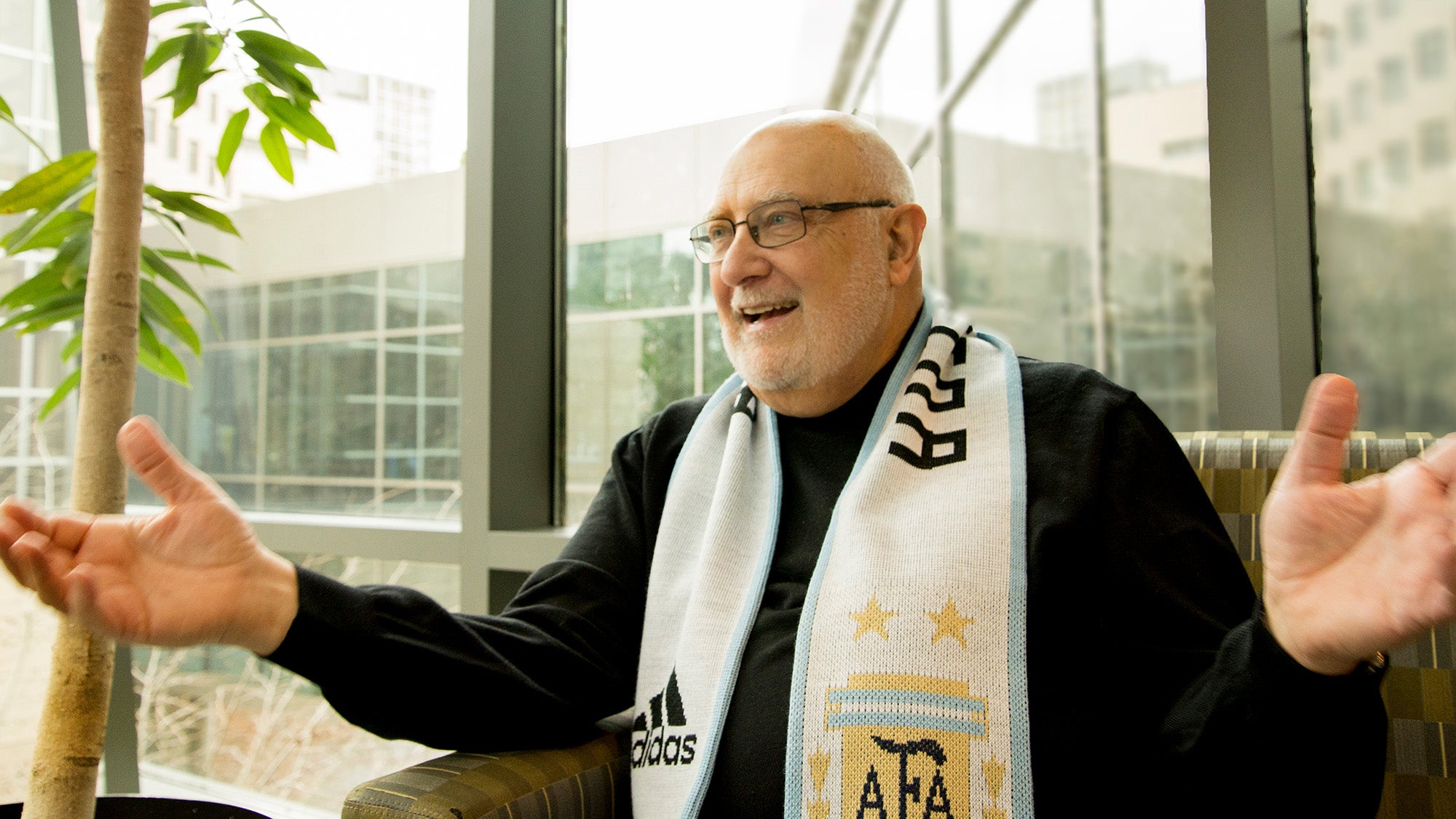
Georgetown School of Medicine 2026 Commencement Speaker: Carlos A. Pellegrini, MD, FACS
(April 27, 2026) — Growing up in a farming village of 400 people in the province of Santa Fe, Argentina, Carlos A. Pellegrini, MD, FACS, absorbed a philosophy of medicine early on that would guide him for the rest of his career.
Pellegrini’s parents, the only two physicians for the surrounding countryside, rarely turned anyone away who needed care. Friends, neighbors and local farmworkers would turn up at all hours to see the doctors. Payment, if it came at all, might be eggs, a chicken, or produce from a patient’s garden.
“There was something very powerful in these types of personal connections, not just with the patients but with everyone they worked with,” Pellegrini said.
Pellegrini had intended to stay in Argentina after completing his medical training at the Universidad Nacional de Rosario. By 1975, however, he said the political climate had made it impossible to remain. He left at age 29 for the United States — a country where he had spent only a year in Kalamazoo, Michigan, as a teenager.
Pellegrini reached out to a surgeon he knew at the University of Chicago who had previously invited him to join his team and was offered a position in his laboratory. The role was meant only to fill a bit of time before Pellegrini left for a post in Saudi Arabia, but he chose to stay in Chicago, fully aware that doing so meant starting his surgical training over from scratch in order to practice in the United States. He was undeterred.
“I thought of it as a reshaping of my life, and to the extent possible, an opportunity to take advantage of learning a lot of new things,” he said.
He completed a fellowship in esophageal physiology and surgery at the University of Chicago and finished his residency in general surgery in 1979 with his American board certification.
During his training, while he already excelled in the operating room, he found he had much to learn about the complex post-operative care that American medicine demanded, including from major surgeries like kidney transplantation that were virtually unheard of in Argentina.
“When it came to the operating room, I could do things that none of my peers could,” he recalled. “But when it came to managing patients, I had to learn from them. So it was a sort of interchange.”
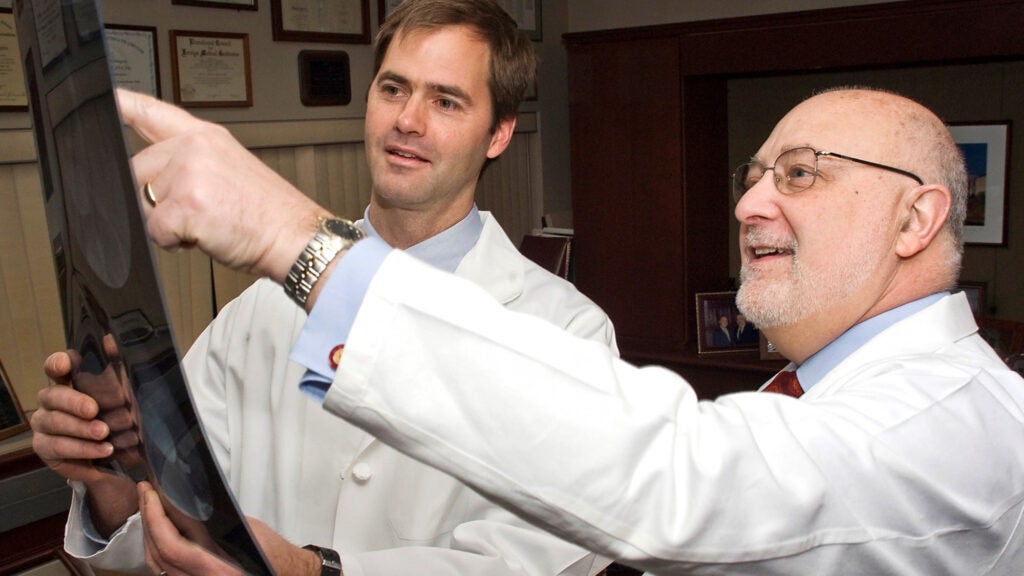
Throughout his years in academic medicine, Pellegrini sought to transform not just what students learned, but the kind of practitioners they would become.
After completing training, Pellegrini joined the faculty at the University of California, San Francisco. In 1993, he moved to the University of Washington in Seattle to become chair of the Department of Surgery, where he would remain for 23 years. In 2015, he was appointed University of Washington’s first chief medical officer and vice president for medical affairs, a position he held until his 2018 retirement.
Over his career, Pellegrini was recognized as a pioneer of minimally invasive gastrointestinal surgery, particularly through the use of video endoscopy for esophageal disease.
His accomplishments include serving as president of the American College of Surgeons and the American Surgical Association, and as chair of the Board of The Joint Commission. He is invested as a Knight of the French Legion of Honor and has published more than 400 peer-reviewed articles, chapters, editorials and books.
Called to give back to his adopted country, Pellegrini volunteered for the U.S. Army Medical Corps and was mobilized to active duty in 1991, serving as chief of medical surgery at Walter Reed National Military Medical Center. The Corps’ doctrine — to heal anyone wounded in battle, regardless of side — matched his own convictions.
Changing the Culture
These accomplishments tell just part of his story, however. From the start, Pellegrini sought to transform not just what students learned, but the kind of practitioners they would become. The culture he inherited valued technical excellence above nearly everything else.
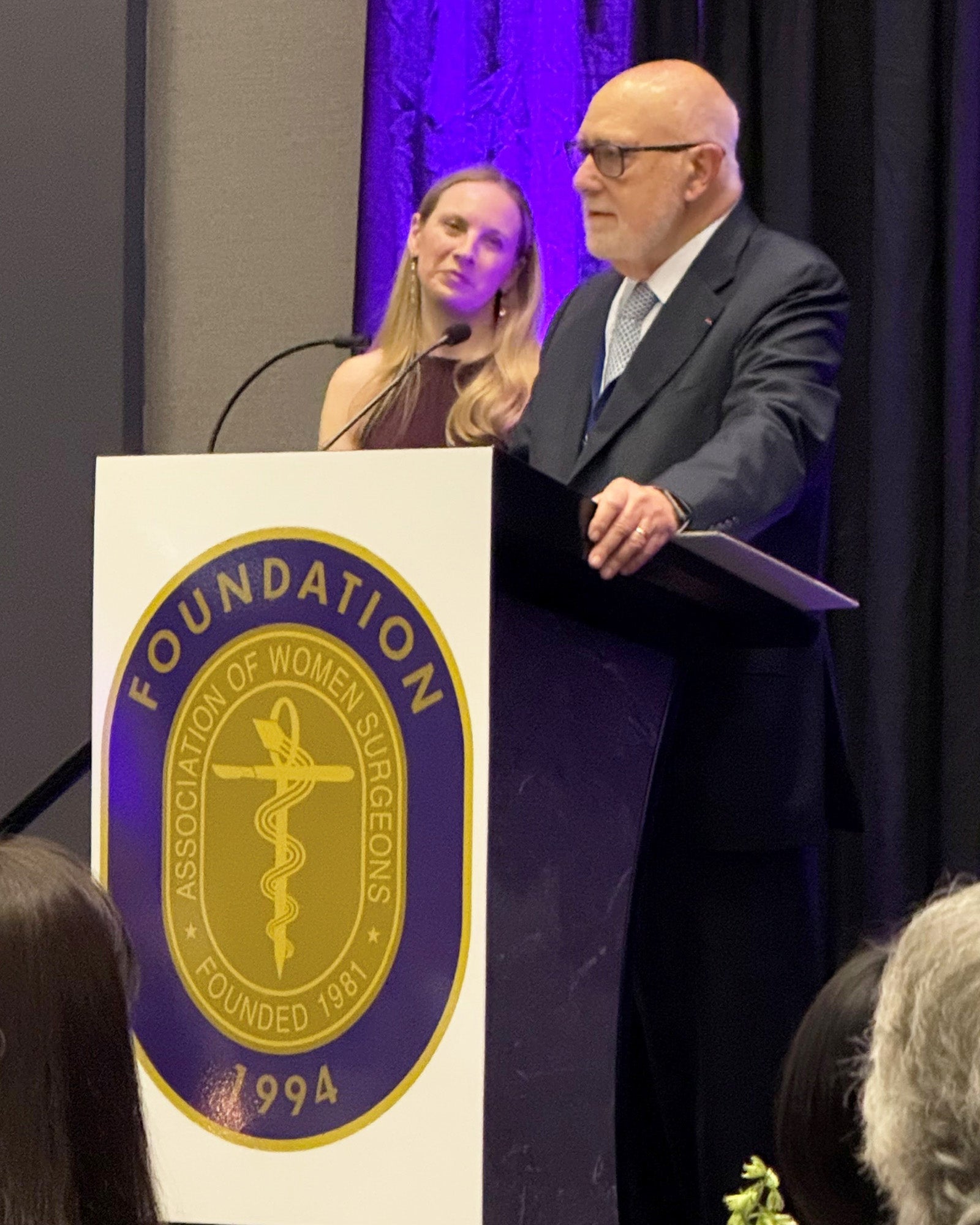
Pellegrini received the Dr. Charles W. Putnam Distinguished Member Award from the Association of Women Surgeons Foundation at the AWS Foundation Gala on October 5, 2025.
“Back then, many surgeons were perceived by patients, by nurses, by society as individuals who would operate very well but without establishing a meaningful relationship with the patient,” he said. “The measure was how strong you were technically.”
He made his intention known that he wanted to change the culture. In his first year as chair, he set out to bring more women and physicians from underrepresented backgrounds into the training program. He also helped drive a national reduction in resident work hours.
Under his leadership, the department shifted its focus from pure technical performance toward the ethical dimensions of practice and the quality of relationships between physicians, patients and colleagues.
“The technical portions are extremely important, so I wasn’t trying to exchange one for the other,” he said. “I just thought that we could change the perception of a surgeon into something with more humanity.”
‘For the Journey’
After retiring from academic medicine, Pellegrini enrolled in a program to become an executive coach. When the director asked why he wanted to make this pivot, he gave her an answer she still remembers: “For the journey.”
He is now a certified executive coach who works with healthcare leaders. It’s a chapter he didn’t plan for, but realizes is connected to a crucial question: What happens when we lose the human dimensions of medicine?
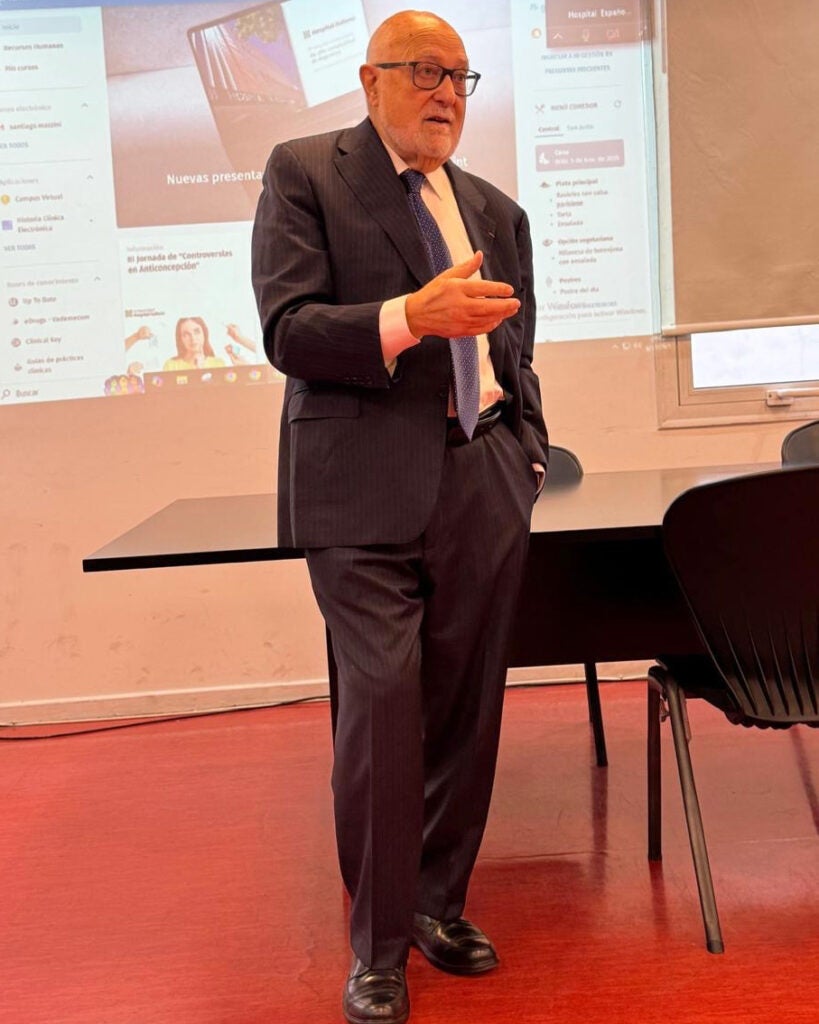
Pellegrini spoke at the 95th Argentine Congress of Surgery, held in Buenos Aires, Argentina, last October.
Pellegrini sees the answer to this as inextricably tied to Georgetown’s founding value of cura personalis, or care for the whole person.
“The first symptom of burnout is depersonalization. You start treating patients as objects. And eventually, the lack of good care follows because you have nothing left to give.”
He has started a daily gratitude practice, which he now brings to his coaching work, asking the executives he works with to identify three things each week they are grateful for.
“We are wired to pay attention to the bad things,” he said. “But doing this without noticing the good eliminates the possibility of joy.”
Pellegrini says his philosophy of medicine, rooted in his exposure to his parents’ medical practice, comes down to what he calls “the other person in the room.”
“You cannot give what you do not have,” he said. “But when you connect with another human being without compromising your values, you find a sense of flourishing, a sense of practicing a profession that is truly great.”
Top image: Dr. Pellegrini wears a scarf celebrating AFA Argentina’s 2022 FIFA World Cup victory.
All images courtesy of Carlos Pellegrini, MD, FACS
- Tagged
- Commencement 2026