Up to $51.7M ARPA-H Award Backs Georgetown University and Buck Institute Co-led ‘Super Team’ To Predict and Intervene in Harmful Protein Changes Before Disease Begins
SEEDS team unites protein science, artificial intelligence and computational modeling with expertise in neuroscience and cancer to study proteins implicated in some neurodegenerative diseases and cancer.
CONTACTS:
Buck Institute: Kris Rebillot / KRebillot@buckinstitute.org
Georgetown University: Karen Teber / km463@georgetown.edu
WASHINGTON and NOVATO, Calif. (Oct. 12, 2026) — A research “super team” co-led by the Buck Institute for Research on Aging and Georgetown University has received an award of up to $51.7 million from the Advanced Research Projects Agency for Health (ARPA-H) to predict how disease-causing proteins misfold before irreversible damage occurs and use those predictions to develop novel diagnostics and treatments. The four-year effort is expected to lead to new ways of detecting, slowing and treating neurodegenerative diseases and cancer, with an initial focus on Alzheimer’s disease and Ewing sarcoma.
Protein misfolding and aggregation are associated with Alzheimer’s disease, amyotrophic lateral sclerosis (ALS), some cancers and other chronic and degenerative conditions. Many of the proteins involved have long been considered “undruggable” because they lack the stable shapes and binding pockets that most drugs are designed to fit.
Today, researchers can capture snapshots of these proteins, often only after they have already clumped together, but they cannot reliably predict how they will behave as conditions inside the cell change, or when those changes start to become harmful.
To address these challenges, team SEEDS (Sequence-to-disease: Environment-aware Ensembles of Disordered proteins at Scale), an integrated research consortium co-led by Georgetown’s Priyanka Joshi, PhD, and the Buck Institute’s Chuankai (Kai) Zhou, PhD, brings together expertise in protein science, artificial intelligence, computational modeling, cancer and neuroscience to create a platform that can mitigate disease due to misfolded proteins. The team includes researchers from 10 academic institutions and seven industry partners.
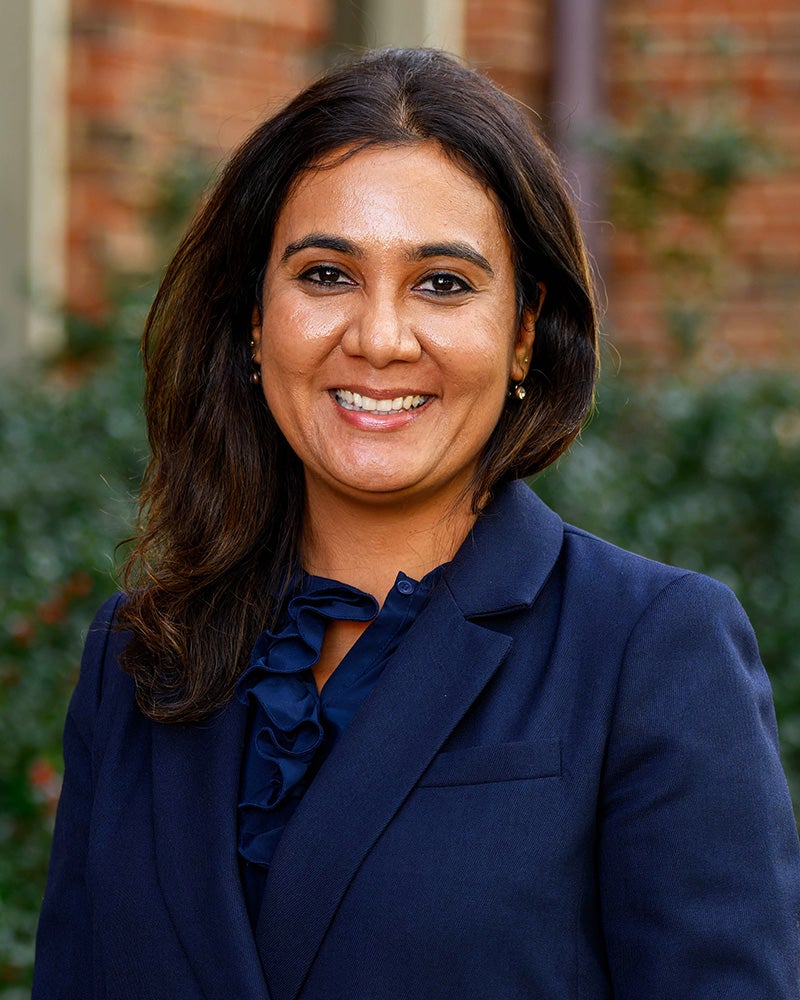
Priyanka Joshi, PhD (Image: Georgetown University)

Chuankai (Kai) Zhou, PhD (Image: Buck Institute)
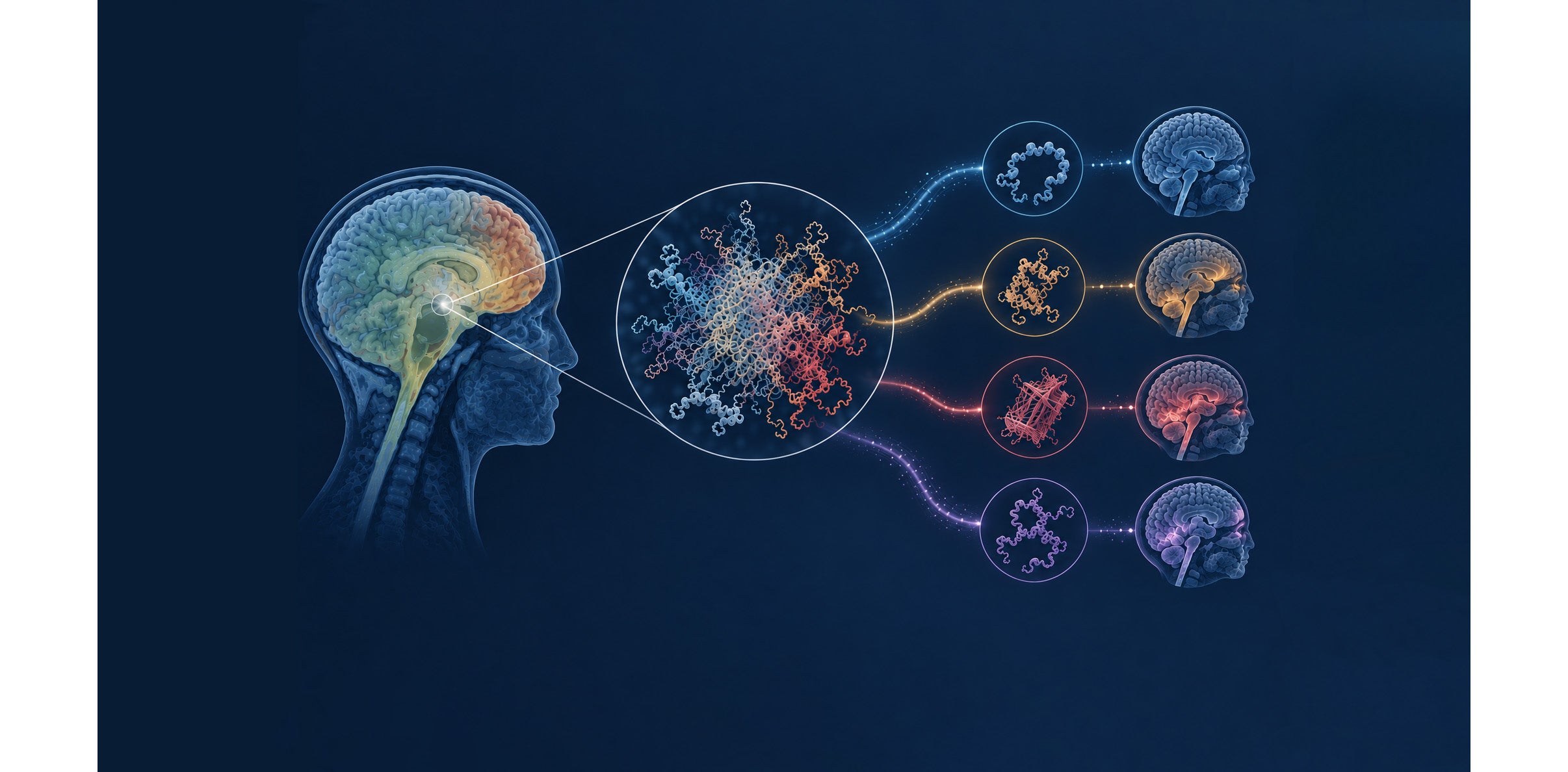
The proteins being studied are called intrinsically disordered proteins, or IDPs. Unlike many proteins that adopt relatively stable three-dimensional structures, IDPs form many different shapes. Conditions inside the cell, including acidity, molecular crowding, metals, metabolites and chemical modifications, can influence which forms they take and how they behave. That flexibility allows IDPs to perform important functions in healthy cells, but it also makes them extraordinarily difficult to understand and target when something goes wrong.
The goal is to move from describing these proteins one at a time to predicting their behavior from sequence and surroundings alike, and to turn that prediction into ways to detect, and ultimately prevent, the shifts that lead to disease. Importantly, the team will pair computational predictions with experimental measurements, testing protein behavior under different conditions rather than relying on computer models alone.
AI tools such as AlphaFold have transformed protein science by learning from decades of accumulated data about protein structures. But researchers don’t have the same wealth of structural information for intrinsically disordered proteins, Zhou says, making it much harder to build models that can predict how they behave. SEEDS aims to help close that gap by developing new ways to study these proteins and mapping their behavior at unprecedented scale.
“We aim to uncover the principles that determine when these proteins remain in healthy, functional ensembles and when they begin to shift toward disease-associated states,” says Zhou, assistant professor at the Buck Institute. “Ultimately, this work could enable us to detect and potentially redirect harmful conformational changes before they lead to irreversible cellular damage.”
Central to that effort is understanding how a protein’s environment influences its behavior.
“Can we recognize when a protein is headed in a harmful direction before it gets there, and if so, can we change its course?” asks Joshi, an assistant professor in the Department of Biochemistry and Molecular & Cellular Biology at Georgetown University School of Medicine. “That question brought this team together.”
Joshi compares the challenge to learning the grammar of a language: Researchers need to examine proteins at scale while studying some closely enough to understand how their behavior changes with context. By combining physics-guided AI with experiments that test and refine the model’s predictions, the team hopes to uncover the molecular grammar that connects protein sequence and environment to behavior. “We want to catch the seed before it grows into disease,” Joshi says.
Learning the ‘Grammar’ of Protein Behavior
Team SEEDS is part of ARPA-H’s BIOmolecular Grammar for protein Aggregation Modulation and Intervention (BIOGAMI) program. BIOGAMI focuses on the earliest stages of protein dysfunction, before proteins misfold or clump together and cause lasting damage to cells. The program uses the idea of a molecular “grammar.” If researchers can learn the rules that govern how flexible, disordered proteins behave, they may eventually be able to predict and influence what happens when that behavior begins to change. BIOGAMI is led by ARPA-H Program Manager Shannon Greene, PhD.
Protein misfolding and aggregation are associated with Alzheimer’s disease, amyotrophic lateral sclerosis (ALS), some cancers and other chronic and degenerative conditions. Many of the proteins involved are difficult to target with conventional medicines because they lack the stable structures and binding pockets that traditional drug development often relies upon.
SEEDS brings together two complementary research teams, Georgetown’s INTREPID and the Buck Institute’s SHIFT, to generate the data needed to train artificial intelligence to recognize the rules governing these proteins and predict their behavior. The teams will tackle that challenge from different directions: one going deep, the other going broad.
At the Buck Institute, SHIFT (Structural Characterization of Intrinsically Disordered Regions at Scale) will bring scale to the effort by mapping the different context-dependent shapes that intrinsically disordered regions can take across a broad range of human proteins. That large-scale view is intended to reveal patterns that studies of individual proteins alone cannot capture.
At Georgetown, INTREPID (INTegRated Environment-aware Prediction Engine for Intrinsically Disordered Protein Pathology) will examine in depth how a protein’s sequence and cellular environment affect the range of shapes it can take and how it behaves. Researchers will combine high-throughput and high-resolution experimental measurements, computation and artificial intelligence, with a particular focus on tau and EWS::FLI1, proteins implicated in Alzheimer’s disease and Ewing sarcoma respectively, studying the proteins from purified systems through human tissue.
Together, INTREPID and SHIFT will generate complementary data to decipher the molecular grammar connecting protein sequence and environment to protein behavior. Data from both efforts will be integrated to train foundation models designed to predict the context-dependent conformational ensembles of intrinsically disordered regions.
Two Teams, One Consortium Built Around the Problem
At Georgetown, Joshi will be joined by Jeffrey Toretsky, MD, whose research focuses on Ewing sarcoma and the disordered EWS::FLI1 protein; R. Scott Turner, MD, PhD, who directs Georgetown’s Memory Disorders Program and brings longitudinal clinical, imaging and biomarker expertise; Carlo Tornatore, MD, who leads the neurology department at Georgetown and MedStar Health; Rodrigo Maillard, PhD, an expert in single-molecule biophysics; Steven Metallo, PhD, whose research includes small-molecule interactions with disordered proteins; Junfeng Ma, PhD, an expert in mass spectrometry-based proteomics; and Mark Burns, PhD, and Harshul Pandit, PhD, whose work includes preclinical models of tau pathology.
At the Buck Institute, Zhou will be joined by Tara Tracy, PhD, who has expertise in translational tauopathy research and therapeutic discovery, and Birgit Schilling, PhD, director of the Institute’s Proteomics and Metabolomics Center, with expertise in protein-protein interaction networks and mass spectrometry-based assays.
Academic collaborators across the SEEDS consortium include principal investigators at the University of Maryland, Baltimore (Pratyush Tiwary, PhD); University of Maryland, Baltimore County (David Garcia, PhD); CIRMMP (Consorzio Interuniversitario Risonanze Magnetiche di Metallo Proteine) (Isabella Felli, PhD); Stanford University (Xiaojing Gao, PhD); the University of California, San Francisco (Yifan Cheng, PhD); the University of Denver (Kingshuk Ghosh, PhD); and Memorial Sloan Kettering Cancer Center (Asmin Tulpule MD, PhD). Industry partners include Nautilus Biotechnology, Nanost, Inc., Emergente, Neuroene Therapeutics, Post Translational Medicines, Inc., Praio and Omphalos Lifesciences, contributing expertise and technologies ranging from protein mapping and diagnostics to computational modeling and therapeutic development.
“This ambitious project reflects how Buck approaches diseases of aging: moving beyond treating disease after it presents and working to prevent the earliest molecular changes that drive dysfunction in the first place. By bringing together exceptional scientists across disciplines and institutions, SEEDS has the potential to create an entirely new framework for understanding, and some day intervening in, the chronic diseases of aging,” says Eric Verdin, MD, president and CEO of the Buck Institute.
The team’s scientific ambition is driven by the urgency of what is at stake for patients and families.
“The most difficult health challenges are rarely solved by one discipline or one institution working alone,” says Norman J. Beauchamp Jr., MD, MHS, executive vice president for health sciences at Georgetown University. “Many of the diseases linked to these proteins have resisted our best efforts to treat them, taking an enormous toll on patients and families. SEEDS brings together extraordinary people and expertise around the belief that if we can better predict when these proteins are headed toward disease, and find ways to intervene, we can change what is possible for patients and families. That is how we advance science in service of health, hope and healing.”
This research was funded, in part, by the Advanced Research Projects Agency for Health (ARPA-H). The views and conclusions contained in this document are those of the authors and should not be interpreted as representing the official policies, either expressed or implied, of the U.S. Government.
Top Image: Disordered proteins constantly change shape in response to their surroundings. SEEDS combines AI and advanced experiments to map how these shifts can lead to harmful forms associated with neurodegeneration. (Image: Scientific illustration generated with AI)