NIH Awards CTSA for Georgetown-Howard Clinical and Translational Research Partnership
Highly competitive award to Georgetown University and Howard University recognizes innovations in a longstanding collaboration advancing discovery, educating future scientists, engaging communities and improving patient care and community health.
Media Contact
Karen Teber, km463@georgetown.edu
WASHINGTON (August 11, 2026) — Georgetown University Medical Center and Howard University, in close collaboration with MedStar Health, have received the National Institutes of Health’s highly competitive Clinical and Translational Science Award (CTSA) for nearly $28 million over seven years.
The CTSA program supports a network of research centers that has accelerated scientific discovery, overcome barriers to translating research into improved health, strengthened the clinical research enterprise, educated future scientific leaders and improved lives in the Washington region and beyond for more than 15 years. The award provides nearly $28 million over seven years.
The award supports the Georgetown-Howard Universities Center for Clinical and Translational Science (GHUCCTS), one of a select group of academic research partnerships in the U.S. recognized for excellence in clinical and translational science by the NIH’s National Center for Advancing Translational Sciences. It provides funding for the infrastructure and resources that enable researchers to move promising discoveries from the laboratory into clinical practice while preparing the next generation of scientists and ensuring research addresses the needs of the communities they serve. The GHUCCTS is led by Jason G. Umans, MD, PhD, for Georgetown University and Marjorie C. Gondré-Lewis, PhD, for Howard University.

Jason G. Umans, MD, PhD

Marjorie C. Gondré-Lewis, PhD
“Receiving a CTSA is both a tremendous honor and an important responsibility,” said Norman J. Beauchamp Jr., MD, MHS, executive vice president for health sciences at Georgetown University Medical Center. “For more than 15 years, Georgetown University and Howard University, together with MedStar Health and our many collaborators, have demonstrated what is possible when leading academic institutions and health systems work together to advance discovery, educate future scientific leaders and improve health. This award reflects our shared commitment to discovery, education and service, and ultimately, to finding new and better ways to improve health and expand access to care.”
Howard University leaders framed the award as recognition of infrastructure that the two institutions built together.
“The Clinical and Translational Science Award is a testament to the strength of our research enterprise and the trust placed in us to expand and innovate,” said Andrea A. Hayes Dixon, MD, FACS, dean of the college of medicine and vice president for health affairs at Howard University. “Over the past 15 years, Howard University and Georgetown have built lasting research capacity together, helping accelerate scientific discoveries into better care for patients. Sustained federal investments of this kind help us build lasting capacity that continues to benefit our communities beyond the life of any single grant.”

Norman J. Beauchamp Jr., MD, MHS

Andrea A. Hayes Dixon, MD, FACS
A cornerstone of the consortium’s success is Georgetown’s longstanding partnership with MedStar Health, which connects researchers with one of the nation’s leading integrated health systems and accelerates the translation of scientific discoveries into better patient care, and creates opportunities for clinical research that directly benefits patients.
“Our longstanding partnership with Georgetown University has created an environment where scientific discovery and patient care continuously inform one another,” said Neil J. Weissman, MD, MedStar Health chief scientific officer. “Together with Howard University and our GHUCCTS partners, we are able to connect researchers with patients across one of the nation’s largest healthcare systems, helping promising discoveries reach the bedside more quickly while generating new knowledge that improves care for future patients.”
At the heart of GHUCCTS is a collaborative research enterprise that brings together investigators across disciplines to address complex health challenges. The consortium extends beyond Georgetown, MedStar Health and Howard through partnerships with the Washington DC Veterans Affairs Medical Center and Oak Ridge National Laboratory.
Since its launch in 2010, GHUCCTS has united these collaborators around four interconnected priorities: advancing innovative research, educating future clinical and translational scientists, engaging communities as research partners and building collaborations that expand the reach and impact of scientific discovery.
The consortium’s success is rooted in collaboration. By combining the complementary strengths of Georgetown, MedStar Health and Howard with clinical, scientific and technology partners across the region and nation, GHUCCTS has built an ecosystem that accelerates discovery while expanding opportunities for investigators and trainees.
“The next chapter of GHUCCTS will build on a remarkable foundation while embracing new opportunities in data science, artificial intelligence and precision medicine,” said GHUCCTS principal investigator Umans, associate professor of medicine, associate vice president for translational science at GUMC, and scientific director of the basic and translational science laboratories at MedStar Health Research Institute.
“Our greatest strength will continue to be our ability to bring together scientists, clinicians, trainees and communities across institutions to solve problems that no one organization could solve alone,” said Umans. “Equally important, it allows us to prepare the next generation of scientists who will lead this work for decades to come.”
After serving in multiple leadership roles since GHUCCTS was established in 2010, Umans succeeds Joseph G. Verbalis, MD, as the Georgetown principal investigator. Gondré-Lewis has served as Howard principal investigator for the past three years after succeeding Thomas Mellman, MD. Verbalis and Mellman, the consortium’s inaugural investigators, led GHUCCTS through multiple successful funding cycles and helped establish the consortium as a nationally recognized leader in clinical and translational science. Under their leadership, GHUCCTS expanded research infrastructure, strengthened regional collaborations and created innovative programs that continue to support investigators throughout their careers while advancing research that improves health.

Joseph G. Verbalis, MD
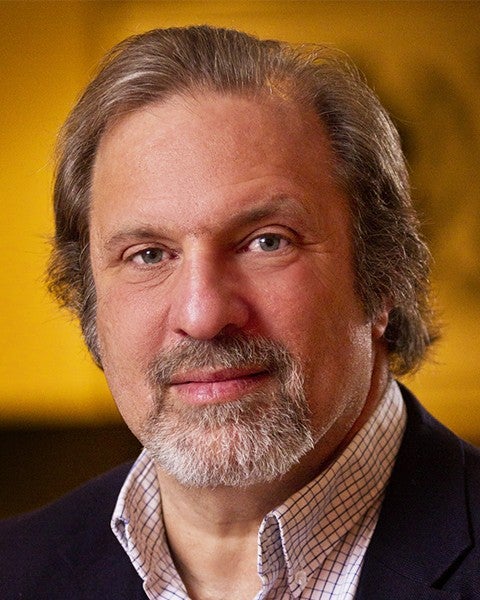
Thomas Mellman, MD
“We look forward to this new and exciting phase of GHUCCTS to transform further the translational science landscape in the D.C. region. GHUCCTS offers robust workforce development and education programs across the continuum of community members, students and faculty. We’ve integrated new dissemination and implementation science capability to extend the reach and impact of our work, and will develop innovative artificial intelligence models for intervention in clinical practice,” said GHUCCTS principal investigator Gondré-Lewis, professor of neuroscience and associate dean for faculty development at Howard University College of Medicine.
The CTSA is complemented by continued NIH support for GHUCCTS’s T32 and K12 institutional training and career development programs. These awards, along with new programs to train clinical research professionals and advance the discipline of research nursing, provide a continuum of support for the entire translational research workforce.
GHUCCTS also recognizes that meaningful scientific advances require strong community engagement. By instituting both community and participant advisory boards, partnering with patients, community organizations and local leaders throughout the research process, investigators ensure that studies address real-world priorities, build trust, and produce findings that are relevant to the communities they serve.
This commitment has strengthened research participation, informed study design and helped ensure that scientific discoveries can be translated into improvements in health for all communities.
The award will continue to support innovative research, workforce development, data science, community-engaged research and collaborative clinical studies across the consortium’s partner institutions, ensuring that GHUCCTS remains at the forefront of efforts to accelerate scientific discovery into better health.
Research reported in this report is supported by the National Center For Advancing Translational Sciences of the National Institutes of Health under Award Number UM1TR005465. The content is solely the responsibility of the authors and does not necessarily represent the official views of the National Institutes of Health.